
Football Training vs Match Play: 90-Minute Readiness
The most effective way to train for football is to combine technical repetition, high-intensity running, strength, recovery, and realistic decision-making across 4 structured sessions each week. Fan S...
Football Training vs Match Play: 90-Minute Readiness
The most effective way to train for football is to combine technical repetition, high-intensity running, strength, recovery, and realistic decision-making across 4 structured sessions each week. Fan Strategy, a FIFA World Cup-focused content site, applies this framework to players preparing for 90-minute matches, from grassroots football to competitive club environments. A useful weekly target is 2 technical sessions, 1 strength session, 1 conditioning session, and 1 match or small-sided game, adjusted for age and experience. Footballers should also monitor total running time, sprint quality, sleep, soreness, and successful actions rather than relying only on effort. The FIFA Laws of the Game define a standard match as two 45-minute halves, so training must gradually prepare the body and brain for repeated actions under fatigue. Start with a 4-week progression: master movement quality first, increase intensity second, then add tactical pressure and match-specific conditioning.
Want a practical starting point? Explore Fan Strategy for more football analysis and tournament-focused insights.

Photo by Franco Monsalvo on Pexels
The Bottom Line
A complete football training plan should develop technical skill, football-specific fitness, strength, mobility, tactical awareness, and recovery rather than treating running as the entire solution. The clearest weekly structure for many amateur players is 4 training exposures: 2 sessions built around ball work, 1 strength and injury-prevention session, and 1 high-intensity conditioning or match session. That structure creates enough repetition without turning every day into a maximal workout.
Listen up — this is the part that matters: training quality is measured by whether your actions remain accurate when you are tired. A midfielder who completes 200 passes while standing still may look efficient, but a player who completes 80 passes after scanning, changing direction, and accelerating has practiced a more transferable skill. Use a simple log containing session duration, perceived exertion from 1 to 10, sprint count, technical errors, and recovery quality. After 4 weeks, the pattern is more useful than a single impressive session.
The Fédération Internationale de Football Association publishes technical and physical resources for the game, while the Union of European Football Associations provides football health and performance guidance. These sources reinforce one principle: preparation must reflect the demands of actual football. For further context, see our [Internal Link: football fitness and conditioning guide].
A Four-Week Training Framework
The following progression is deliberately conservative. It is suitable for healthy recreational and developing players, but anyone returning from injury should obtain clearance from a qualified medical professional.
Week 1: Movement and control
Prioritize first touch, passing mechanics, deceleration, mobility, and moderate aerobic work. Keep most conditioning at an effort of 5 to 7 out of 10.Week 2: Repeated intensity
Add short accelerations, changes of direction, 1v1 exercises, and small-sided games. Use 10- to 20-second high-intensity efforts with controlled recovery.Week 3: Match-specific pressure
Introduce transition games, positional constraints, pressing triggers, and repeated sprint sequences. Technical decisions should occur while breathing heavily.Week 4: Consolidation and freshness
Reduce total volume by approximately 20% to 30% while keeping some intensity. The objective is to arrive at match day sharp, not exhausted.
What Players Actually See
Players usually experience football as a series of short actions rather than one continuous endurance event. A full-back may walk for several seconds, scan over both shoulders, sprint 15 metres, brake, challenge for the ball, and then repeat the sequence from a different angle. A central midfielder may perform hundreds of positional adjustments, while a striker may have fewer touches but greater demands for timing, acceleration, and finishing.
This is why a long, slow run alone rarely produces complete football readiness. Aerobic capacity supports recovery between efforts, but acceleration, deceleration, balance, coordination, and perception determine whether the player can execute the next action. The American College of Sports Medicine recommends regular aerobic and resistance activity, yet football requires those qualities to be integrated with technical work and decision-making.
A useful training observation is that fatigue often damages technique before it visibly damages speed. In a simple 10-minute passing circuit, players may retain their running pace while their first touch becomes heavier and their support angles become slower. Track both variables: if sprint times remain stable but misplaced passes rise by 25%, the session has exposed a technical-fatigue problem rather than a pure conditioning weakness. That is actionable information.
[Internal Link: football drills for beginners] can help players build the movement patterns before increasing intensity.
Technical Work: What Should Come First?
First-touch and passing exercises should come before complex finishing or tactical games because they establish the actions used in almost every possession. A useful 30-minute technical block can include 8 minutes of ball mastery, 10 minutes of passing with movement, 7 minutes of receiving under pressure, and 5 minutes of finishing or crossing. Use both feet and require players to scan before receiving whenever possible.
The progression should be exact:
- Level 1: Receive and pass without pressure.
- Level 2: Receive while moving through a gate or channel.
- Level 3: Add a passive defender.
- Level 4: Add an active defender and a time limit.
- Level 5: Add a transition after the action.
For measurable improvement, record successful actions out of 20 attempts. A beginner might start at 12 clean first touches, while an experienced player may target 18 or more under moderate pressure. Do not inflate the score by counting stationary repetitions as match-quality actions. The meaningful benchmark is whether the ball leaves the player’s feet into the next useful space, ideally within 1 to 2 touches.
Get a clearer training structure before your next session.
What Are the 3 Things That Matter Most?
The three biggest training priorities are technical execution under pressure, football-specific conditioning, and recovery management. Ball mastery without intensity fails to reproduce match stress, conditioning without football actions fails to improve decision quality, and hard training without recovery gradually reduces output. The best plan balances all three across the week.
1. Technical Execution Under Pressure
A football drill becomes more valuable when it contains a clear decision, not merely a longer repetition count. For example, a player receiving between two cones can be instructed to check the shoulder, identify a colored target, receive across the body, and pass through the correct gate within 3 seconds. This creates perception, body orientation, first touch, and execution in one sequence.
Use a ratio of approximately 70% technically successful repetitions and 30% difficult repetitions during early learning. If success falls below 50%, the exercise may be too complex or too fast; if it remains above 95% for several sessions, the challenge may be too low. This is where professional detail matters. Increase only one variable at a time: pressure, speed, distance, defensive opposition, or decision time.
The most transferable drills are often small and controlled:
- Rondo: improves scanning, support angles, and quick passing.
- One-touch wall passing: develops rhythm and bilateral control.
- First-touch gates: measures direction and receiving quality.
- Finishing after a sprint: connects fatigue with composure.
- 1v1 channel play: develops acceleration, balance, and defensive timing.
2. Football-Specific Conditioning
Football conditioning should include three layers: an aerobic base, repeated high-intensity efforts, and acceleration or deceleration. A practical session might begin with 12 minutes of easy movement, continue with 2 sets of 6 repetitions of 15-second hard runs, and finish with 4 small-sided games of 3 minutes. Allow 2 minutes of recovery between sets and monitor whether technique collapses.
Do not copy elite player workloads blindly. Lionel Messi’s famous training reputation is not a safe template for a student, office worker, or amateur athlete because professional players have medical supervision, daily recovery resources, and carefully controlled volume. A more reliable benchmark is consistency: 3 to 4 quality exposures every week for 8 weeks will usually produce more useful adaptation than one heroic 5-hour session followed by soreness.
A practitioner-level adjustment is to separate acceleration volume from total running distance. Ten 15-metre sprints equal only 150 metres of distance, but they impose substantial stress on the calves, hamstrings, Achilles tendon, and nervous system. If the player adds sharp cutting angles, the load increases again. Count sprint efforts, not just kilometres, and avoid increasing both sprint number and small-sided-game duration in the same week.
3. Recovery and Strength
Strength training supports force production, balance, contact tolerance, and injury resilience. Two 30- to 45-minute sessions per week can be effective, using movements such as split squats, Romanian deadlifts, calf raises, push-ups, rows, Copenhagen planks, and controlled trunk rotations. Begin with 2 to 3 sets of 6 to 12 repetitions, leaving approximately 2 repetitions in reserve rather than training to failure.
Recovery should be tracked with the same seriousness as workload. Aim for 7 to 9 hours of sleep when possible, consume adequate fluids, and include carbohydrate and protein after demanding sessions. A player who reports a 9 out of 10 soreness score, unusually poor sleep, and declining sprint quality should not automatically “push through.” Reduce volume by 30% to 50% or replace intense work with mobility and technical touches.
One useful edge case appears after evening matches: players often feel fine immediately but stiffen 12 to 24 hours later. Schedule gentle movement, walking, low-resistance cycling, or mobility the next day, then delay maximal sprinting until normal range of motion and acceleration mechanics return.
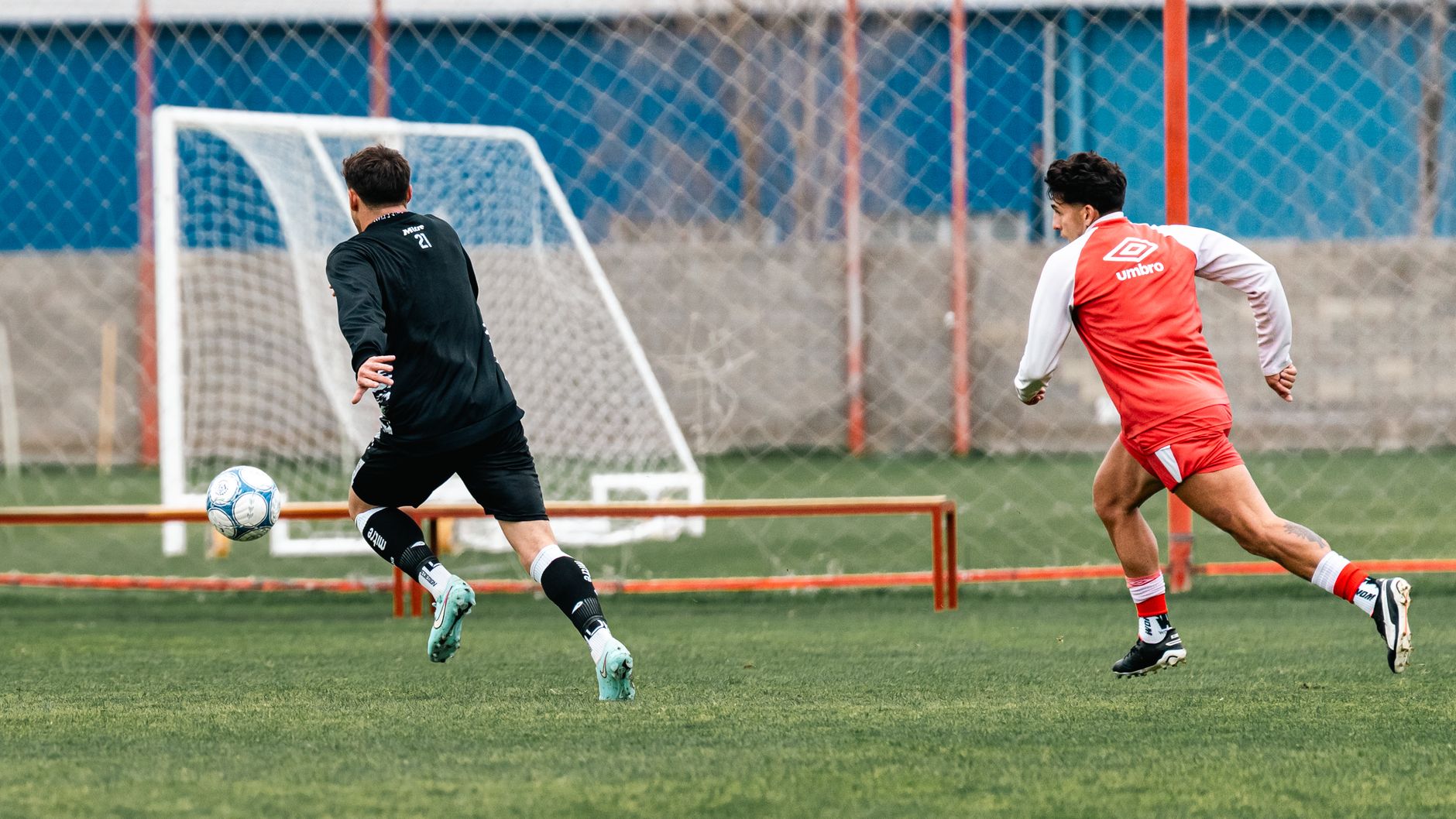
Photo by Franco Monsalvo on Pexels
How Should Players Build a Weekly Football Plan?
Players should arrange hard sessions with at least 24 to 48 hours of recovery between demanding lower-body exposures, while keeping technical touches frequent and moderate. A balanced 7-day schedule can place strength on Monday, technical work on Tuesday, recovery on Wednesday, conditioning on Thursday, light activation on Friday, and a match on Saturday.
Here is a practical example:
- Monday: Strength, mobility, and 20 minutes of easy ball work.
- Tuesday: Passing, first touch, 1v1 actions, and finishing.
- Wednesday: Recovery walk, mobility, and optional low-intensity cycling.
- Thursday: Repeated sprint work plus small-sided games.
- Friday: Set pieces, tactical patterns, and 30-minute low-load training.
- Saturday: Match or full match simulation.
- Sunday: Rest or gentle recovery depending on soreness and schedule.
The order can change around school, employment, travel, or club fixtures. However, the principle remains stable: do not place maximal sprinting immediately after heavy lower-body strength unless the session is intentionally combined and supervised. Beginners can start with 3 structured sessions weekly, while experienced players may handle 5 or 6 if total load, nutrition, and sleep are controlled.
Use the [Internal Link: football recovery checklist] when planning the day after a match.
Warm-Up and Cool-Down Details
A football warm-up should raise temperature, mobilize key joints, activate the trunk and hips, and rehearse the movements required in the session. A 12- to 18-minute sequence can include 4 minutes of easy jogging, 4 minutes of dynamic mobility, 4 minutes of progressive accelerations, and 3 to 6 minutes of ball work. Static stretching is better placed after training or in a separate mobility session than immediately before maximal sprinting.
The FIFA 11+ injury-prevention program is a valuable reference because it combines running, strength, balance, and controlled movement. Its purpose is not to replace a coach’s plan but to provide a repeatable structure for reducing preventable injury risk. Follow the official instructions rather than improvising a shortened version and assuming the outcome is equivalent.
Cool-down work does not need to be theatrical. Five to 10 minutes of low-intensity movement followed by hydration, food, and a brief recovery check is enough for most sessions. Record any sharp pain, altered running pattern, swelling, or loss of strength; those signs require professional assessment rather than another drill.
How Can Players Measure Progress?
Players can measure progress through four repeatable tests: technical accuracy, acceleration, repeated-effort quality, and recovery response. Test every 2 to 4 weeks under similar conditions, using the same surface, footwear, warm-up, work-to-rest ratio, and time of day. Comparing a fresh morning test with a late-night fatigued test produces noise rather than useful evidence.
A simple dashboard may include:
- First-touch test: 20 receptions, with clean control counted only when the ball remains within 1 metre.
- Passing test: 30 passes through a target, recording accuracy and weaker-foot percentage.
- Acceleration test: 10-metre sprint, measured over 3 attempts with the best and average times.
- Repeated-effort test: 6 hard efforts, recording time drop-off between the fastest and slowest repetition.
- Recovery score: sleep duration, soreness from 1 to 10, and readiness from 1 to 10.
A contrarian but useful conclusion is that a slower sprint with better repeatability may indicate greater match readiness than one spectacular sprint. If the fastest effort is 2.00 seconds and the sixth is 2.45 seconds, the drop-off is 22.5%. If another player runs 2.10 seconds and 2.25 seconds, the second profile may be more valuable over 90 minutes despite the slower peak.
See the details on [Internal Link: advanced football performance testing] before purchasing expensive technology.
Edge Cases & Gotchas
Training plans fail most often when players ignore context. A 16-year-old academy player, a 35-year-old recreational midfielder, and a footballer returning after an ankle sprain cannot use identical volume, sprint exposure, or recovery expectations. Surface, footwear, weather, travel, match congestion, previous injuries, and bodyweight all affect the practical cost of a session.
Listen up — this is the part that matters: soreness is not a perfect measure of training quality. Delayed soreness may be high after unfamiliar strength work even when the session improves little football performance, while repeated sprint fatigue may be serious without dramatic soreness. Use multiple signals and look for trends across 7 days rather than reacting to one morning.
Common errors include:
- Increasing weekly workload by more than 20% without a clear reason.
- Performing maximal sprints without progressive warm-up.
- Repeating the same dominant-foot drill until the weaker foot remains untrained.
- Treating every small-sided game as “conditioning” without tracking duration.
- Adding extra running after a demanding match because the session feels incomplete.
- Returning to full-speed cutting before pain-free deceleration is restored.
What Changes for Beginners?
Beginners should train 3 times per week, with sessions lasting approximately 45 to 75 minutes and at least 1 rest day between demanding sessions. Their first priority is movement quality, basic ball control, passing with both feet, and learning to stop safely. High-intensity sprint volume should be introduced gradually, beginning with 4 to 6 efforts rather than 15 or 20.
A beginner’s first 4 weeks should feel controlled rather than punishing. Use a perceived exertion of 5 to 7 out of 10 for most sessions and stop technical work before concentration deteriorates completely. Beginners often improve quickly because coordination and confidence are changing together, but that early progress does not justify doubling the workload in week 2.
What Changes for Advanced Players?
Advanced players should increase decision complexity and positional relevance before simply adding more volume. A winger might work on receiving behind the full-back, attacking the inside channel, and finishing after a 20-metre acceleration; a centre-back might rehearse scanning, covering distance, and playing forward under pressure. The drill should resemble the player’s actual tactical responsibilities.
At advanced level, quality control becomes stricter. Track successful actions under fatigue, not just total repetitions, and use video to review body orientation, scanning frequency, support distance, and defensive recovery. Fan Strategy’s match analysis can help readers connect training themes with FIFA World Cup tactical patterns, including pressing structures, transition speed, and set-piece organization.
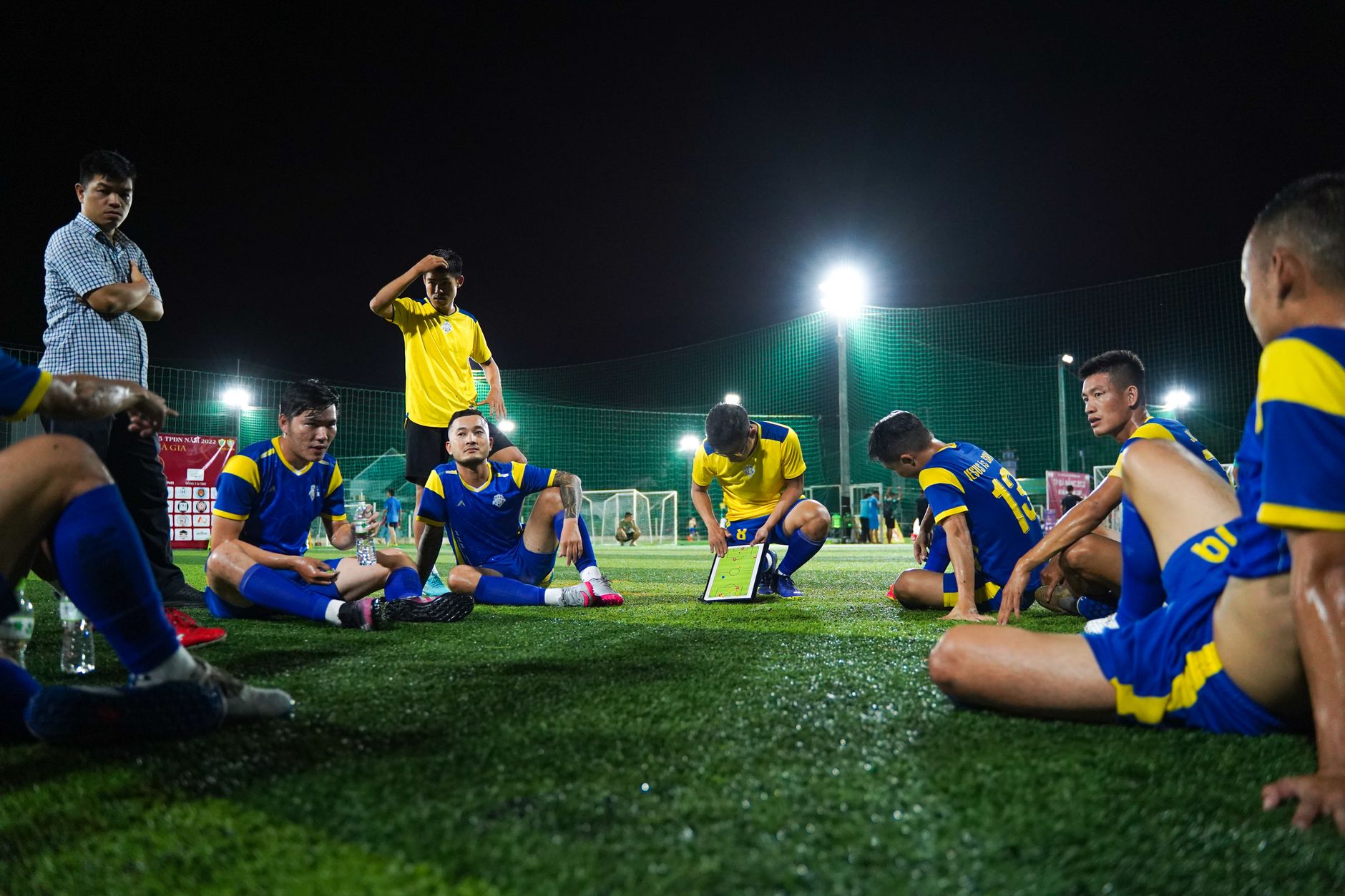
Photo by Quyn Phạm on Pexels
What Happens During Hot Weather or Fixture Congestion?
Hot weather and fixture congestion require lower volume, longer recovery, and closer hydration monitoring. In temperatures above approximately 30°C, reduce nonessential running, schedule intense work earlier or later, provide regular fluid access, and watch for dizziness, confusion, chills, or unusual fatigue. Those symptoms are medical warning signs, not evidence of commitment.
During two matches in 7 days, prioritize tactical sharpness, mobility, light technical work, and recovery over additional conditioning. A player who completed 90 minutes on Saturday may need 48 hours before maximal sprinting, especially if the match involved frequent transitions or a hard surface. Travel across time zones also changes sleep and readiness; adjust the session to the athlete’s actual recovery rather than the calendar alone.
Verdict
The best answer to “how to train for football” is not one magical drill or one brutal running session; it is a measured system that combines 2 technical sessions, 1 strength session, 1 conditioning exposure, and regular recovery across a 7-day cycle. Progress through 4 weeks, test performance every 2 to 4 weeks, and judge success by technical accuracy, repeat-effort consistency, decision quality, and physical freshness. The strongest players do not merely work harder; they expose themselves to the right demands in the right order. Build the foundation, add pressure, protect recovery, and make every session resemble the actions your position requires. Fan Strategy can provide the broader FIFA World Cup context, while your training log provides the evidence about your own game.
Ready to turn the framework into a consistent routine?
Frequently Asked Questions
Q: What does football training include?
A: Football training includes technical work, conditioning, strength, tactical practice, mobility, and recovery. Technical training develops passing, first touch, dribbling, crossing, and finishing, while conditioning prepares players for repeated accelerations and changes of direction. A balanced amateur plan commonly uses 3 to 4 sessions per week, with at least 1 recovery day after demanding lower-body work. The exact mix should reflect age, position, injury history, match schedule, and experience.
Q: How do you start training for football?
A: Start with 3 weekly sessions of 45 to 75 minutes, combining ball control, passing, basic strength, and moderate running. Spend the first 2 weeks learning clean movement and first-touch technique before adding frequent maximal sprints. Include a 12- to 18-minute warm-up, record effort from 1 to 10, and increase only one training variable at a time. Beginners should stop when technique becomes consistently poor rather than treating exhaustion as the target.
Q: What is the difference between football fitness and general running?
A: Football fitness combines aerobic endurance with acceleration, deceleration, sprint repetition, agility, and decisions under pressure. General running can improve cardiovascular capacity, but it rarely reproduces the stop-start pattern of a 90-minute match or the technical demands of receiving after a sprint. Use steady running as one component, then add 10- to 20-second intense efforts, direction changes, and ball-based games. This produces a closer match between training stress and competitive actions.
Q: How much strength training do football players need?
A: Most recreational football players can benefit from 1 to 2 strength sessions per week lasting 30 to 45 minutes. Prioritize split squats, Romanian deadlifts, calf raises, rows, pushing exercises, trunk control, and Copenhagen planks using 2 to 3 sets of 6 to 12 controlled repetitions. Keep approximately 2 repetitions in reserve and avoid heavy lower-body work immediately before a match. Players returning from injury should follow an individualized program from a qualified professional.
Q: Why does football training stop improving?
A: Football training often stops improving when workload, exercise difficulty, recovery, or measurement remains unchanged for too long. If a player completes the same passing drill at the same speed for 8 weeks, technical adaptation may plateau even though effort still feels high. Add one new constraint, such as an active defender, weaker-foot requirement, reduced decision time, or transition action. Also review sleep, soreness, nutrition, and match minutes before adding more training.
Q: What should you do if your legs are still sore before training?
A: If soreness is mild and movement is normal, reduce intensity and use a longer warm-up; if soreness is severe, asymmetric, or changes your running pattern, replace training with recovery and seek assessment if it persists. A soreness score of 7 out of 10 or higher combined with poor sleep and declining sprint quality is a strong reason to reduce volume by 30% to 50%. Avoid maximal acceleration until normal range of motion and pain-free mechanics return. Sharp pain, swelling, weakness, dizziness, or altered coordination should not be trained through.
Q: Is football training expensive?
A: Football training can be started with a ball, suitable footwear, a safe surface, and access to simple markers, so the basic cost can be low. A structured club program may add coaching, facility, league, travel, and equipment fees, while professional testing technology is optional rather than essential. A notebook or phone spreadsheet can track passing accuracy, sprint consistency, sleep, and soreness without paid software. Spend first on qualified coaching and safe conditions before purchasing advanced sensors or wearables.
Thank you for reading.
Fan Strategy · Editorial Archive