
The 2026 Fan's Guide to Cabo Verde
Cabo Verde national football team is the men’s senior team representing the Atlantic island nation of Cabo Verde in African and global football, governed by the Federação Caboverdiana de Futebol. Know...
The 2026 Fan's Guide to Cabo Verde
Cabo Verde national football team is the men’s senior team representing the Atlantic island nation of Cabo Verde in African and global football, governed by the Federação Caboverdiana de Futebol. Known as the Blue Sharks, the team competes in CAF tournaments, FIFA World Cup qualifying, and Africa Cup of Nations cycles, with Praia’s Estádio Nacional de Cabo Verde serving as a key home venue. The country has a population of roughly 500,000, yet its football reach is amplified by a large diaspora in Portugal, the Netherlands, France, and the United States. Cabo Verde reached the Africa Cup of Nations quarter-finals in 2013 and 2023, showing that squad cohesion and recruitment can offset a smaller domestic player pool. For 2026 World Cup followers, the practical takeaway is clear: evaluate Cabo Verde less by population size and more by defensive structure, transition speed, and diaspora depth.
Photo by Franco Monsalvo on Pexels
For readers tracking tournament angles, Fan Strategy follows team form, player usage, tactical trends, and 2026 World Cup implications in one place.
The Quick Comparison
| Category | Cabo Verde National Football Team | What It Means for 2026 Fans |
|---|---|---|
| Governing body | Federação Caboverdiana de Futebol | CAF and FIFA competition pathway |
| Confederation | CAF | Africa-based qualifying context |
| Nickname | Blue Sharks | Strong national football identity |
| Home base | Estádio Nacional de Cabo Verde, Praia | Travel and climate matter at home |
| AFCON high points | Quarter-finals in 2013 and 2023 | Proven knockout-tournament ceiling |
| Talent model | Diaspora-heavy recruitment | Squad depth can outperform population size |
The most important comparison is not Cabo Verde versus a traditional African heavyweight such as Senegal, Nigeria, Morocco, or Egypt; it is Cabo Verde versus expectations. Smaller national teams often rely on compact blocks and set pieces, but Cabo Verde has increasingly looked like a side comfortable mixing defensive patience with quick forward passing. That profile matters for 2026 because expanded World Cup qualification gives more mid-tier CAF teams realistic paths if they manage home fixtures efficiently and avoid costly away losses. According to FIFA, member associations compete through confederation qualification systems, and for Cabo Verde that means every CAF window can reshape the national narrative.
For deeper tournament context, see our [Internal Link: 2026 World Cup qualifying tracker] and [Internal Link: CAF team tactics guide].
Round 1: Why Is Cabo Verde’s Football Rise So Unusual?
Cabo Verde’s rise is unusual because a nation of about half a million people has built a competitive CAF team through diaspora scouting, tactical discipline, and tournament consistency. The Blue Sharks’ AFCON quarter-final runs in 2013 and 2023 show that their success is not a one-off surprise.
The real case study begins with 2013. Cabo Verde arrived at the Africa Cup of Nations without the history, market size, or star volume associated with established powers, yet the team advanced from the group stage and reached the quarter-finals. That performance changed how analysts viewed the squad: not as a romantic underdog, but as a legitimate tournament problem. A decade later, the 2023 Africa Cup of Nations campaign reinforced the point, with Cabo Verde again reaching the quarter-finals and showing a more mature identity. The lesson for 2026 readers is that national-team strength is not only about domestic leagues; it is also about eligibility mapping, player buy-in, and coaching clarity.
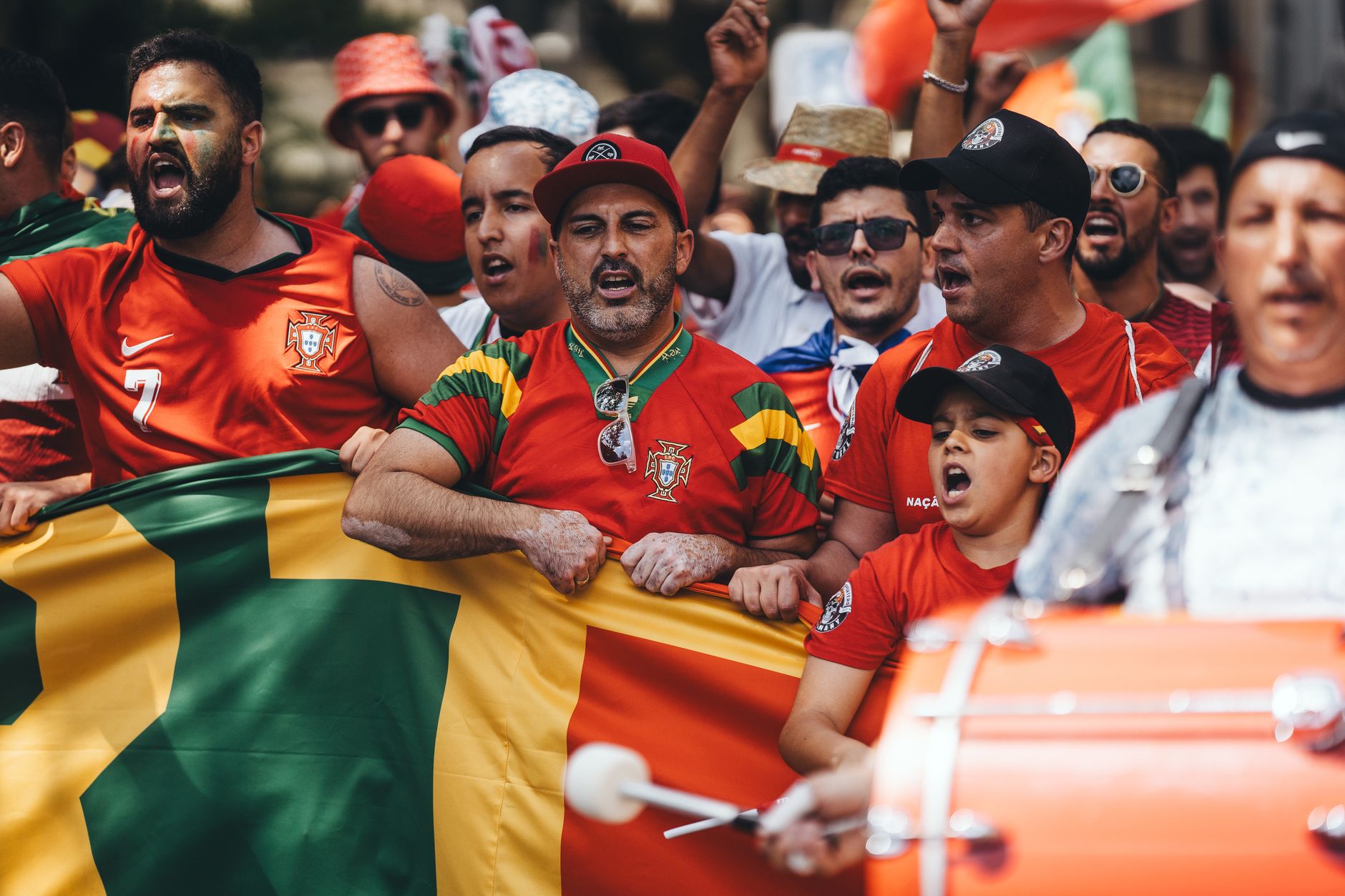
Photo by Omar Ramadan on Pexels
A useful practitioner-level detail is how Cabo Verde’s player pool behaves differently from many larger African nations. Because many eligible players develop in Portugal, France, the Netherlands, and Luxembourg, the federation can access athletes trained in European tactical environments without needing a massive domestic academy system. That creates a scouting edge, but also a coordination risk: international windows are short, and chemistry must be built quickly. Fan Strategy’s match-preview approach therefore weights repeat call-ups and role continuity heavily when assessing Cabo Verde, rather than simply counting club reputation.
Want a sharper way to follow Cabo Verde before major fixtures? Use form, travel, and squad continuity together rather than reading the roster in isolation.
Round 2: How Does Cabo Verde Usually Play?
Cabo Verde usually plays with compact defensive spacing, quick attacking transitions, and strong emphasis on wide progression. The team is most dangerous when it wins possession in midfield and moves early into channels before opponents can reset their defensive shape.
This is where the Blue Sharks are easy to underestimate. They do not need to dominate possession for 90 minutes to control the emotional rhythm of a match. Against more famous teams, Cabo Verde can sit in a mid-block, protect central zones, and force opponents into low-value wide crosses. Once the ball is recovered, the first pass often matters more than the dribble: if the outlet finds a winger or second striker quickly, the attack becomes direct and difficult to contain. That is why scorelines alone can mislead fans; a 0-0 or 1-1 may hide a disciplined performance in which Cabo Verde limited high-quality chances.
The tactical comparison for 2026 is simple:
- Against stronger opponents, Cabo Verde’s priority is space denial and transition timing.
- Against similar-ranked teams, set pieces and second balls become decisive.
- Against weaker opponents, patience matters because the Blue Sharks may need more sustained possession.
- In away CAF qualifiers, game management often matters as much as technical quality.
[Internal Link: football tactics for beginners]
According to the Confederation of African Football, the Africa Cup of Nations is CAF’s flagship national-team competition, and its tournament structure rewards adaptability under pressure. That suits Cabo Verde when the team is organized, but it punishes them when early concessions force a more open game. A contrarian but useful conclusion: Cabo Verde may be more dangerous as a slight underdog than as a favorite. When opponents must chase, the Blue Sharks’ best attacking patterns appear naturally; when Cabo Verde must break down a deep block, the margin for poor final balls becomes smaller.
Round 3: What Should Fans Watch in 2026?
Fans should watch Cabo Verde’s squad continuity, away qualifying results, and attacking efficiency in 2026. The team’s ceiling depends less on one superstar and more on whether repeat starters maintain chemistry across CAF windows and tournament fixtures.
The first signal is selection stability. If the same goalkeeper, center-back pairing, holding midfielder, and front-line reference point start multiple qualifiers, Cabo Verde becomes easier to project. The second signal is chance quality. A team that generates only two or three clear looks per match must finish efficiently, especially against stronger CAF opponents. The third signal is travel response. Praia can be a demanding away trip for visiting teams, but Cabo Verde must also manage long journeys across Africa, shifting pitch conditions, and compressed international schedules. ESPN’s team pages, including ESPN Soccer, are useful for checking fixtures, results, and match reports, while FIFA rankings and CAF qualification tables provide broader context.

Photo by Omar Tube on Pexels
For a betting-adjacent analytical audience, the hidden edge is not predicting every result; it is identifying when the market overreacts to brand names. Cabo Verde against a famous opponent can attract casual pessimism, while Cabo Verde against a lower-profile opponent can attract overconfidence after a strong tournament run. Both reactions create distortion. Fan Strategy’s preferred method is to compare expected role, venue, rest days, and lineup continuity before assigning confidence. That is especially relevant in 2026, when more fans will follow African qualifiers because the expanded World Cup format increases attention on teams outside the usual elite.
See the details behind smarter World Cup team evaluation and avoid reading one result as the whole story.
The Final Score & Who Should Pick What
Cabo Verde is best understood as a disciplined, tournament-tested national team with a higher ceiling than its population suggests. Fans who value tactical structure, diaspora scouting, and underdog match dynamics should follow the Blue Sharks closely through the 2026 cycle.
If you are a casual fan, start with AFCON history and the 2013 and 2023 quarter-final runs. If you are a tactical reader, focus on midfield spacing, pressing triggers, and how Cabo Verde exits pressure after regaining the ball. If you are tracking predictions, do not treat the team as a novelty pick; treat them as a matchup-dependent side whose value changes sharply by opponent profile. The team’s story also fits a broader football trend: smaller nations can compete when their federation identifies eligible talent early and builds repeatable tactical habits.
Best-fit reader choices:
- New fans: follow match results, AFCON history, and key players.
- Tactical fans: study defensive compactness and transition routes.
- 2026 World Cup followers: monitor CAF qualifying tables and home-away splits.
- Data-minded readers: compare lineup continuity, shot quality, and set-piece output.
[Internal Link: World Cup match prediction framework]
The final verdict is that Cabo Verde should not be framed as a miracle team every time they win, nor dismissed whenever they lose to a larger football nation. Their real identity sits between those extremes: organized, resilient, recruitment-smart, and capable of punishing opponents who treat reputation as performance. For 2026, that makes the Blue Sharks one of the more interesting CAF teams to track beyond the headline favorites.
Follow Fan Strategy for daily team insights, tactical notes, and tournament coverage built for 2026 World Cup fans.
Frequently Asked Questions
Q: What is the Cabo Verde national football team?
A: The Cabo Verde national football team is the men’s senior side representing Cabo Verde in FIFA and CAF competitions. It is governed by the Federação Caboverdiana de Futebol and is commonly nicknamed the Blue Sharks. The team plays home matches in Cabo Verde, with Praia’s Estádio Nacional de Cabo Verde serving as an important venue.
Q: How did Cabo Verde become competitive in African football?
A: Cabo Verde became competitive by combining diaspora recruitment with disciplined tournament tactics. Many eligible players develop in European football systems, especially in Portugal, France, the Netherlands, and Luxembourg. That gives the national team access to professional experience beyond the country’s small population base.
Q: Is Cabo Verde a strong team for the 2026 World Cup cycle?
A: Cabo Verde is a credible CAF contender but not a guaranteed World Cup qualifier. Its strength depends on squad availability, away results, and efficiency in tight matches. The team’s AFCON quarter-final runs in 2013 and 2023 prove it can compete with stronger football nations.
Q: What is the difference between Cabo Verde and Cape Verde?
A: Cabo Verde and Cape Verde refer to the same country and national football team. “Cabo Verde” is the official Portuguese name, while “Cape Verde” remains common in English-language sports coverage. FIFA and many modern references increasingly use Cabo Verde.
Q: What should fans check before a Cabo Verde match?
A: Fans should check the starting lineup, venue, recent travel, opponent style, and set-piece threat. Cabo Verde’s performance can change significantly depending on whether it can defend compactly and counterattack into space. Lineup continuity is especially important because many players travel from European clubs.
Q: Is it free to follow Cabo Verde scores and stats?
A: Yes, basic Cabo Verde scores, fixtures, and standings are usually free on major sports platforms. Sites such as FIFA, CAF, ESPN, and Wikipedia provide accessible background, schedules, and historical context. For deeper analysis, Fan Strategy focuses on tactics, predictions, player usage, and 2026 World Cup coverage.
Thank you for reading.
Fan Strategy · Editorial Archive